
I’m in Organic Chemistry Lab with 15 other college students. I never skip this class—mainly because I need a good grade in it, and also, because I think it’s fun.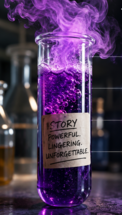
I stand at my lab station with my very own Mr. Wizard Chemistry Set—except it’s not a toy. There are fragile glass beakers, pipettes, and other instruments of science. And there are chemicals. Some dangerous chemicals.
Wearing my safety glasses, I carefully add hydrochloric acid into a test tube containing my KMnO₄ solution. The result is a frenzied concoction—not explosive, but active and producing a pungent cloud of vapor.
Too late, I realize that I’ve just created chlorine gas. And now I’m breathing it! Not good.
The glasses protect my eyes, but my nose and mouth get the vapor. I rush to the safety sink where you can turn on a generous stream of water to flush your eyes—or in my case, my nose and mouth. I splash water on my burning lips. I can feel everyone in the lab staring at me.
But all I can think about is how I’ve probably cooked my airways and lungs. After a few minutes, the burning stops, and I turn off the water. I am relieved to find that I can breathe okay.
But something lingers.
My lab teacher asks if I’m okay, and I say yes. I certainly learned a lesson about chemical reactions: Never assume anything. That’s why they call it an experiment.
He continues to look at me after I finish talking. I hope he isn’t thinking of giving me an ‘F’ on this lab. Other students are still staring. I leave the room.
I go down the hall to the restroom to wash up with soap and water. Then I need to get back to class, finish my lab work, and record my findings.
I look in the mirror, Ohmygod.
The skin all around my lips is purple.
Very. Dark. Purple.
I had potassium permanganate on the gloved hand I used to splash water on my mouth. I try a wet paper towel and soap to scrub, but nothing changes.
I ask my lab teacher how to remove the stain.
“You'll just have to let it wear off,” he says. “Could take a couple of weeks.”
Great. Two weeks of grape juice face.
And so I learned that even simple chemistry can be powerful... and lingering.
Chemical activity in the brain is also powerful and lingering.
Did you know that hearing a story actually changes your brain chemistry?
When we listen to information alone, only the language centers of our brain tend to activate. But when we hear a story, our brain behaves as though we are experiencing the events ourselves. If the story describes movement, our motor cortex lights up. If it describes a smell, our sensory areas respond.
Yes, this means that the lab experience you just joined me in did something to your brain: A story creates a remarkable chemical cascade in our brains.
Tension releases cortisol, causing us to pay attention. Curiosity releases dopamine, making us eager to discover what happens next and helping us remember it. When we begin to care about the person in the story, oxytocin is released, producing trust and empathy. If the story makes us laugh, endorphins leave us feeling good. Remarkably, our brains associate those positive feelings with the storyteller.
The wonderful thing is that every one of us has stories worth telling. Stories that teach, encourage, make someone laugh, or help another person feel less alone.
We're wired for stories.
I invite you to join me in building your storytelling skills. Let’s connect!






Comments