
Not Your Oracle: AI Do’s and Don'ts (Part 2)
Ken Follett.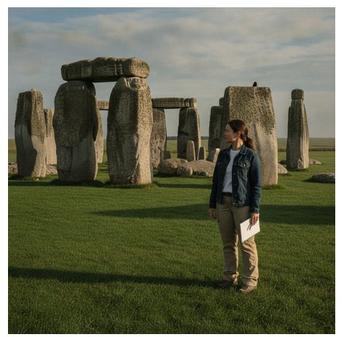
I told my daughter that when she reads a historical fiction novel by Ken Follett, she can be sure the events, dates, and locations are historically accurate (to the best of anyone’s ability, given that they were not actually there in 1135). Reading The Pillars of the Earth is when I looked into Follett’s research practices, because I started to feel like he had actually been there; everything seemed so authentic (maybe he time-traveled?).
I think it was on Wikipedia where I read that, for Circle of Days (set in the Neolithic period), Follett drove around Salisbury to study the environment and imagine how prehistoric people lived, named themselves, and built monuments like Stonehenge. He consulted archaeologists, historians, and other specialists to ground the story in credibility.
Whether you are crafting fiction like Follett or writing nonfiction, good background research is critical. And here’s the good news: You have a brilliant research assistant at hand. The following are some potential research prompts you can use with AI, whether it’s ChatGPT, Perplexity, Claude, or others.
· Act as a research assistant for my nonfiction book about _______.
Then it depends on if you want dates or information from the past (when did the Beatles play in Miami?), or helpful current facts. If the latter, try:
· Find the 10 most important current trends, statistics, and debates and summarize them.
· What are the biggest misconceptions people have about ____ and what evidence can bring clarity and accuracy?
· What are the top 5 credible sources, studies, organizations, and publications I should consult re my topic?
AI research can help with positioning and marketing, as well:
· Act as a market research expert. Identify the top 25 pain points and goals for readers interested in ______. Organize them by practical, emotional, and financial concerns.
· Find gaps in the existing content on _____ that my book could uniquely address.
Of course, AI is not to be trusted with your reputation. You must find multiple ways to verify facts. And, with the internet at your fingertips, you can do that. You no longer have to drive around the English countryside and strive for meetings with experts if you need the forensics on Stonehenge, but you certainly can add your own reconnaissance if you want to. There’s nothing like first-hand experiences.
Use AI as a research assistant, not your oracle.








Comments