
Hadrian built a wall. Epictetus told stories.
I plan to travel over 4000 miles to see some rocks. Sure, we have rocks here in Florida (I live not far from “Rock Springs”), but I want to see a particular pile of rocks in Britain. Those rocks tell a story that fascinates me.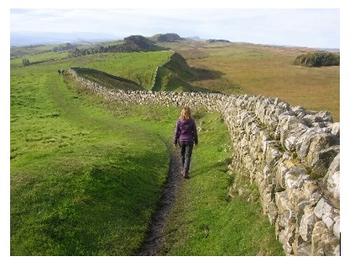
Those rocks are Hadrian’s Wall. Roman Emperor Hadrian had it constructed starting in 122 A.D., so I’ll be walking along and admiring the work of men who lived 1900 years ago.
Hadrian was a pretty interesting guy. He had everything—power, wealth, an enormous army, and access to some of the most brilliant people in the Roman world. If there was someone he wanted to meet, he could simply summon him.
And yet Hadrian admired and sought the wisdom of Epictetus, a philosopher who had been a slave. Some say Hadrian once traveled 500 miles to the Greek city of Nicopolis to hear him speak.
Think about that for a moment.
Here was one of the most powerful men in the world learning from a man who had once been considered someone else’s property. Even Epictetus’s name reflected his beginnings. It means “acquired one” or “purchased one.”
But who was powerful now?
The emperor may have commanded armies, but Epictetus possessed something Hadrian wanted—wisdom. The former slave had something to teach the emperor.
And I think there is another lesson here.
Why would an emperor want to listen to Epictetus?
It wasn’t simply because the man had wisdom. Plenty of people have wisdom and never manage to make anyone listen.
Epictetus knew how to make an idea come alive. He didn’t just lecture people about courage, character, fear, or self-control. He gave them situations they could picture. He used examples, conversations, questions, and the everyday struggles of real people.
Epictetus told stories. We know this because one of his students, Flavius Arrian, transcribed and compiled them into 8 books, The Discourses. Four of these survive today.
Hadrian left us a wall people still travel to see. Epictetus left no monument. He spoke—and someone thought what he said was worth preserving. And more than 1,900 years later, we’re still listening.
You may have extraordinary knowledge. You may have decades of experience. You may have learned something that could genuinely change another person’s life.
But having something worth saying and knowing how to make someone want to listen are two different things. Epictetus had both.
Hadrian built a wall that still stands. Epictetus told stories and taught ideas that still live. I am in awe of both.
The work I love is helping you craft your stories, many of which may outlive you…by who knows how long.








Comments